With the chief physician of POG, Liubov Fedorivna Sliepova, we met in the midst of air raid alerts and her daily concerns. During the conversation, Liubov Fedorivna’s phone did not stop ringing: the most complex surgery was underway (only five such cases have been described in the world), she was concerned about its progress and was ready every minute to run to the intensive care unit.
A resuscitation physician by profession, Liubov Fedorivna worked for over 20 years in the pediatric intensive care unit — six years as a physician and 16 as the head of the department. Therefore, she tries to personally oversee difficult cases.
You have been working at the POG for over 30 years. What is the uniqueness of the POG as a medical institution?
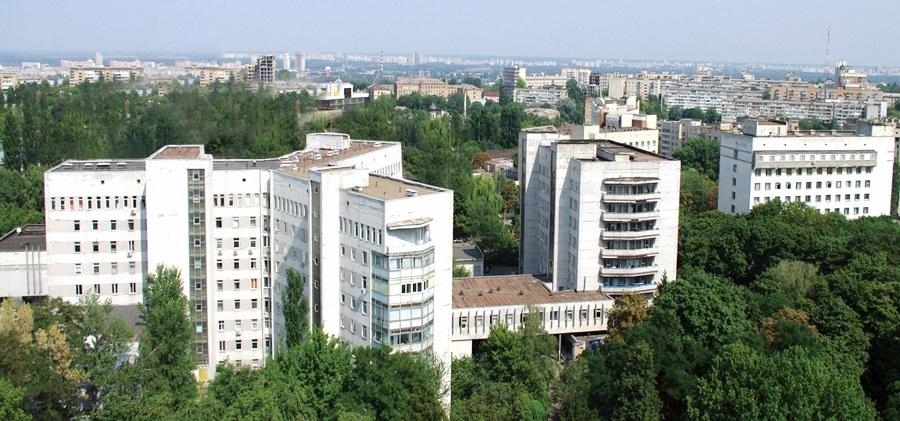
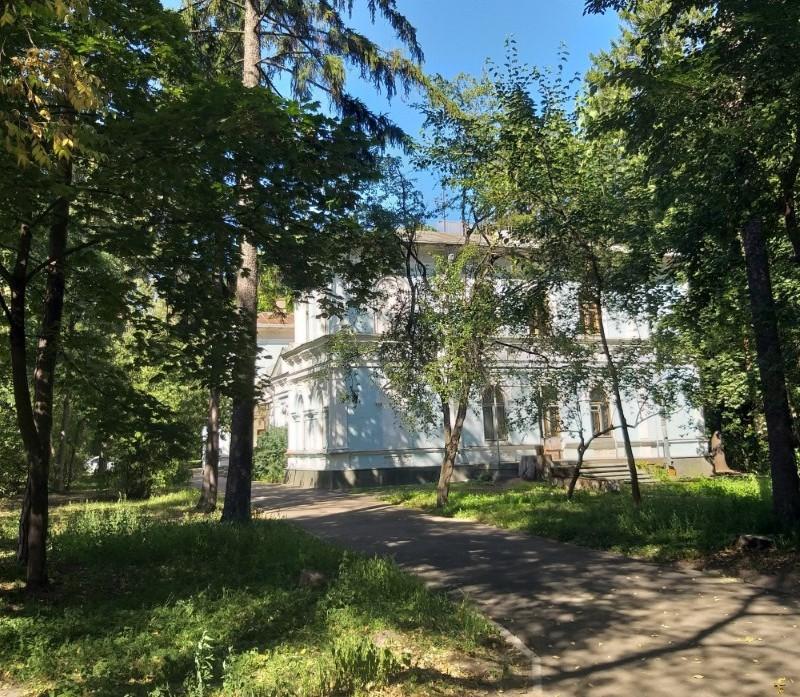
The Institute of Pediatrics, Obstetrics and Gynecology named after Professor Lukyanova is a medical institution that belongs to the National Academy of Medical Sciences of Ukraine. In our scientific and clinical institution, science is a priority that is harmoniously combined with clinical practice. This is not an ordinary hospital — it is a scientific institution. We are the institution that provides light, that shows the way to others. Based on our own clinical experience, we develop tactics that will be used by other medical institutions as well. And in order for us to be able to substantiate the solution of certain problems, we must have relevant patients.
That is, if we want to explain how to treat a certain liver disease and build its treatment principles in practice, we must take on the most complex cases of liver diseases. To our institution we admit children and women from all over Ukraine (with our specialized pathology — pediatric and obstetric-gynecological), who cannot receive full assistance at their place of residence. We are constantly in contact with all regional hospitals — if they have a case that requires our intervention, patients are referred to us. I receive many such calls, often every day. We either provide online consultation, or patients are referred here, sometimes not only for consultation but immediately for hospitalization, and sometimes a patient arrives and goes straight to intensive care. Our institute is the last instance, the final step of highly specialized medical care in Ukraine.
Patients with incorrect diagnoses often come to us. Not because there is no necessary equipment — all hospitals are well equipped now. But medicine is a field where doctors play the key role. You can have the most modern equipment but lack a specialist. And the most valuable thing we have is our specialists. Not scientists who sit in their offices doing quasi-science. No, all our professors are practicing physicians, they are all in the operating room, all at the patient’s bedside. They constantly update their knowledge and improve their skills — not for points to obtain a certification category. But because they know: there is nowhere else to turn. They must save the patient’s life and teach others.
It is said that training personnel is the strategy and philosophy of the POG…
Our institute is a training base for interns in pediatrics, obstetrics and gynecology. And you know, our intern graduates are highly valued in other institutions! This makes me happy, because they are educated here not only as professionals but also as people. We raise a strong medical team and forge a team spirit.
The POG is often called a ‘medical state within a state’, which unites all the chains and directions related to the emergence of new life and its growth. Please tell us about some of them.
Since we consult with severe patients, we see which pathologies are most common, which are difficult to diagnose. And in our institute the most relevant directions today have already been defined. In the pediatric unit — five departments. First, this is the department of older childhood, where we treat severe patients with gastrointestinal disorders and lung diseases. We have an allergology center. And despite the fact that in Kyiv there are many centers dealing with this problem, the number of such children does not decrease, nor do advanced cases.
And what do you think this is related to?
I think the pathogenesis of this disease is not approached in depth. They prescribe an anti-allergy drug — and do not look at the root cause. What is the uniqueness of our institution? I want to emphasize again: our staff actively cooperates with scientific institutions around the world, attends conferences, exchanges information, conducts webinars. If our professor is preparing for a webinar that is listened to by all doctors in Ukraine, they must operate with global scientific data. This is also reflected in practical treatment. Medicine is moving forward, diagnostic criteria and treatment approaches are changing. And of course, we must be leaders. Let us take the pediatric hepatology department. Why did we open it? There was a huge demand. Children with liver diseases are not rare. It would seem that the liver is an organ that should suffer only in adults. But there are an extremely large number of children who have serious liver diseases that lead to disability and even death. And it turned out that very few people were dealing with these diseases at a professional level.
This department is always overcrowded. We have created a center that treats children with digestive disorders. It would seem very banal — digestive disorders. Which child has not suffered from some digestive issues? But when we looked deeper, it turned out that in fact there are many children who have problems with feeding or food absorption. And this is a very complex problem. But we try to solve it in order to help parents obtain a healthy child. In the neurology department, we concentrate children with perinatal damage to the nervous system as a result of pathological childbirth. A very difficult department, because complicated births lead to disability in children. We try to ease the situation for both small patients and parents — it is a huge problem when a child cannot sit, stand, or eat. In our institute there is a follow-up (catamnestic) center. A registry is maintained of children from all over Ukraine who were born prematurely. They are under the supervision of various specialists up to the age of 3.
We observe how the child develops, when they start walking, talking, how they see and hear. That is, all problems that may arise due to premature birth are identified and we try to eliminate them, as well as study how to properly manage these children so that in the future they become full members of society. This is also relevant. The pediatric surgery department is completely unique. We have a department of surgical correction of developmental anomalies in children. When I talk about developmental anomalies, people ask me: heart defects? I say: “No! The human body, besides the heart, has many other organs that can have defects, and they need to be corrected.” And there are a number of defects that must be corrected immediately after birth, otherwise the child will simply die within a few days, or even immediately after being born.
There is an opinion that diseases have become “younger” and congenital defects have increased. Do you agree with this?
The number of defects has not increased, but diagnostics have improved. In the past, children with congenital defects were also born, but unfortunately they were not diagnosed with the naked eye or a stethoscope. The child would die, and perhaps only at autopsy would a diagnosis be established that is now made at the first ultrasound, CT scan, or angiographic examination. But we are the only ones in Ukraine who operate on newborns immediately after birth. The interval between birth and surgical intervention is 5–10 minutes. And this is all thanks to close cooperation with our fetal medicine department. It is also unique. Pregnant women from all over Ukraine are monitored there if something abnormal is suspected in the fetus.
They are referred to us; we have good equipment… Although you understand, any ultrasound diagnostics is an operator-dependent method, where everything depends on who is looking and with what expertise. Our specialists in this department are very strong, and it is there that the decision is made whether we admit the woman to our obstetric department for delivery. We already know that the child has a certain problem, we prepare for delivery, and in a multidisciplinary consultation consisting of a surgeon, an ultrasound specialist, and a resuscitation physician, we determine further treatment tactics. And this has yielded results. The results we currently have are world-class. We are on par with the rest of the world because we have a precise, well-balanced approach to managing this pathology. You understand, every detail matters for a child’s life! First and foremost, we think about their life.
Future mothers are also under your close supervision…
Oh, in the obstetric department — there is no one equal to us there! We have the most severe pregnant patients here. Because every woman, as nature intended, wants to become a mother. And there are many young women who have certain diseases that were previously considered contraindications for pregnancy. But these women become pregnant, hoping to carry and give birth to a child. Unfortunately, during pregnancy the disease may worsen. Termination does not always lead to recovery — rather the opposite. We try to bring the pregnancy to its natural conclusion and obtain a healthy child. A unique department is oncology in obstetrics. Why did we open this department? A pregnant woman diagnosed with oncological pathology was always like a football being passed around. Oncologists would send her to obstetricians because she was pregnant, and obstetricians would send her to oncologists. And these women moved between specialists. We decided to create a single department in our institution where both an oncologist (who can also provide chemotherapy) and an obstetrician-gynecologist work together.
Where, during the procedures needed to treat the main disease, we can monitor the fetus. Especially at later stages — 29–30 weeks. This is already a living, viable child! The department that treats women with endocrine pathology is also special. There are many pregnant women with type 1 diabetes. Diabetes that a woman has had practically since birth leads to significant changes during pregnancy. Such patients are monitored by us. The department of pregnancy loss is almost constantly full. Especially now, when women are under chronic stress and have frequent threats of miscarriage. And women ask: save my child! Often it is a highly desired pregnancy. And we try with all our strength. We have psychologists who work with women, helping them cope with today’s realities, and as a rule everything ends well. There have been no extreme cases. Of course, air raid alarms have been very frequent lately. But our institution has two shelters — one for children and one for women. They have an equipped operating room and are supplied with everything necessary.
So you can perform surgeries right there?
Yes. The shelter has water supplies and an alternative power source. We are well prepared now. There may be a problem with heating, but we have heaters, and they will be powered by generators. In addition, we have enough warm clothing and blankets. Of course, sponsors help us — we would not survive without them. But our front is here! This is our war. We fight for the life of every child, every woman, including military personnel! Right now, many children are being brought to us from the Luhansk, Donetsk, Mykolaiv, and Zaporizhzhia regions — areas where active hostilities are taking place. Psychologists work with the children. We have a very good rehabilitation department where small patients are helped to overcome trauma. Because not only do they have a disease that may worsen, they also arrive in such a state of stress that it is very difficult to bring them back to a normal level. And all of this complicates treatment!
How can one get to your specialists?
It is not necessary to have an electronic referral. No patient who chooses our institution — for example via the website or Facebook page — will be refused. On the contrary, if someone calls from a region and says: we will bring the patient by ambulance — as happened yesterday with a child who is being operated on today — we will accept them. Even if, according to the doctors who called us, we know it is an extremely difficult case that may have unfavorable outcomes… We cannot deny a mother of this child a chance. No one will be refused! No referrals or anything like that are needed. You only need to come to our pediatric outpatient clinic or women’s consultation clinic, where they will definitely see you, provide consultation, and decide whether hospitalization is needed or whether outpatient follow-up is sufficient. We fight for absolutely all children!
Under what “laws” does your “state within a state” PAG live? Please formulate the credo…
Our credo is: “a healthy child from a healthy mother.” How we achieve this is an internal matter. But our mission is to obtain a healthy child — or even simply to obtain a child. There is a condition called gastroschisis, in which a child is born with a defect of the anterior abdominal wall, and the intestines are outside the abdominal cavity. And one of our patients (from one of the regions of Ukraine), upon discharge, said: “Two other women in my care group had the same condition. We were all offered termination because the child would 100% die. But I said: no, I will take the risk.” And she was discharged with a healthy child. The other two women terminated the pregnancy. You understand, this is morally difficult. And we cannot explain to doctors that this should not be done. On the contrary, we must explain to the woman that yes, this is a pathology, it will require immediate surgery after birth. But then it is a healthy child. It is simply a child who is no different from others! So why deprive this woman of motherhood? And what if she has problems with future pregnancies? Therefore, our credo is: a healthy child from healthy parents.
Does the state help you?
Of course, the state helps. The Academy of Medical Sciences is funded by the state. Another matter is that these funds are insufficient for such a large institution with 500 beds, which our institute is. Naturally, we are also helped by sponsors. We try to find any legal ways to attract funding. And through foundations and sponsorship from individual private persons, we reach the level we currently have.
You have completed internships abroad several times and have been to Italy, the United States, Belgium, and Germany. Where is it better to receive treatment?
You are asking the question incorrectly. Of course, I will say it is better to be treated here, because I live here and was born in this country. But these are completely different healthcare systems. In many countries, insurance-based medicine is in place. Through insurance contributions, a person receives a full range of medical services. Although it is not free — nothing is free. It is just that a person goes to a clinic where someone has already paid for them — either the state or through insurance contributions from a legal or private individual. These are completely different approaches. We do not have insurance medicine; here the patient receives some services for free, while for others one must pay, because institutions are not funded 100%. For example, a patient needs a complex operation costing 100,000 UAH, but the state allocated 20,000 for it. So the remaining funds still have to come from somewhere. Because technologically everything is very different now. For example, one catheter may cost 20,000 UAH, or medications — 50,000 UAH. And in any case, someone must pay for it — either the state or the patient.
Are there any unique surgeries performed only here?
I cannot say that. Of course, there are surgeries or services that are provided exclusively in our institute, and also abroad, but there their number is much smaller, or their effectiveness is significantly lower, while ours is better. That also exists.
For example?
For example, surgical treatment of congenital malformations in newborns. The same gastroschisis. We have zero mortality. For the last three years there have simply been no children who died from this pathology. Abroad, they report a 10–15% mortality rate. I am referring to developed countries.
What would you like to adopt from there?
Probably, I would like to eliminate this bureaucracy. For example, there is currently Resolution No. 761, according to which, even if we have funds, we can only purchase equipment that is on the approved list. And I need to buy a video colposcope, but I cannot because it is not included there. I understand that this is valid during martial law, that the state is saving money, and most of the budget goes to national defense. Everyone is working for defense now, wherever we are. Every person is working to bring this war to an end. I very much hope that the war will end soon with our victory, and then we will return to this. It is necessary to update not only the material and technical base of equipment but also buildings. These institutions were built long ago; they are outdated and do not meet current standards. But why build new institutions when there are already enough? Only reconstruction is needed, which will cost much less than building from scratch. It is difficult to create proper conditions in buildings constructed 50–60 years ago. But it is possible! In any case, it is cheaper than building something new. Of course, if we had insurance medicine… And we will have it; we will return to it someday — because now is not the time. But when Ukraine becomes free, when we win, I firmly believe everything will be different. Everything will be better! And people who have lived through all this will be kinder to each other and will rejoice in victory. And I think we will move in the right direction.
And children will grow up in a renewed country…
Yes, I believe in that. Our task today is to ensure that there are people to grow up in this country. That there are children. That women give birth and are not afraid. Because this is truly a big problem: not all women decide to become pregnant. Not all! Some say: there is war, how can you have a child during war. Our task now is to ensure that a woman feels comfortable — physically, mentally, and spiritually — and knows that there is someone who will take care of her and her future child. So that she is not afraid.
You became chief physician of PAG in 2014. You are described as an effective manager who can take on any difficult challenge. But during this time there have been many challenges: COVID-19, lockdowns, and now the war. How do you manage to cope with them?
Life sets the challenges. And it always sets challenges. Perhaps one must be able to separate the secondary from the essential. Especially now, when all our actions must be directed toward preserving staff and patients, so that even in these difficult conditions imposed on us by the war, we can continue to provide medical care.
Your favorite part of the job, the reason behind all of this…
Don’t ask me painful questions. My favorite part of the job is intensive care. It has been, and will remain for my whole life. Because this is my core profession, to which I have devoted most of my life. I really love working with patients. But my current position as chief physician gives me more opportunities to deal with all the most difficult patients. I try to help women and newborn children, and for that I create conditions so that it is comfortable for doctors to work here. That is my task today.
What is your reward in this work?
When a woman who arrived by ambulance leaves the hospital on her own feet with her child — that is the greatest reward for me.
What is the most difficult part of your work?
To create something out of nothing. Here is an example. We needed an alternative water supply, and our institute is located in an area where it is impossible to drill a well due to quicksand-like ground. I twice invited specialists to the institute who had geological maps and explained why it was impossible. They said they could drill it, that a well can be drilled anywhere, but it would not be effective because the shifting underground layers would destroy it. So we took a different path. If there are shellings… anything can happen, we are preparing for the worst — the country is at war. And patients must be provided with everything necessary. We chose another solution. Specialists advised me how it could be done differently. We created huge water reserves. Now everything looks very reliable. The same applies to other problems that at first glance seem impossible. If you approach a problem correctly, a solution can always be found.
They say every doctor has their own graveyard, and it is especially sad and painful when it is a children’s one. Can you tell us about cases when you managed to “convince death to wait”?
Well, there have been many such cases in my life. There are cases that I remember for life, because of which I once even wanted to leave medicine altogether. I simply couldn’t do anything, that’s it. I didn’t want to go to work. But you know, those cases now come back with those patients doing well… and you think: no, it wasn’t in vain after all. Of course, every doctor has this. Unfortunately, deaths happen for absolutely all surgeons and resuscitation doctors. Even though we fight until the very end. A resuscitation physician is both a diagnosis and a way of life. There is no calm day, no night, no minute. The mobile phone is always under the pillow, you wake up at the slightest noise thinking it is the hospital calling. You get dressed and go out in the middle of the night. But deaths still happen simply because the patients treated in our institute are extremely complex. It is work that requires both mental and physical strength. Right now, our pediatric intensive care unit is one of the best in Europe. I am grateful to the “SmartImpact” foundation. I am grateful to the people who helped me achieve this — it is thanks to their efforts. They gave me hope that the department could and should be different, and they were not afraid during the war and worked during air raids. But I look at the young girls, my students. My student is now the head of the department — I trained her. And when surgeons tell me that I have raised a worthy successor, it makes me very happy. These girls work selflessly, even without high pay. Today, for example, a complex and unique operation is underway. Such an operation has never been performed in Ukraine. Only five cases have been described in the world. And the doctor on duty stayed in the operating room, because all the doctors are there now — because they care.
And do miracles happen? Do you believe in miracles?
Miracles happen every day. For us — every day is a miracle, so to speak. Every morning my working day begins with the deputy chief physician reporting on the condition of patients, and separately the head of the intensive care unit. We have three intensive care units — three! And I know the condition of all critical patients. And when they tell you that a patient is feeling better, that the indicators have improved — then the day is off to a good start. It begins well!
Article from the archive of the Public Organization “International Humanitarian Association ‘We Ukrainians'” dated 01.12.2022